The countertops are shorter. When people would ask how it felt to be home, back in the “real” world, I wanted to tell them just that. The countertops are shorter. That’s all I was sure about as I returned to the life I had left behind for a semester. Except they aren’t any shorter. They haven’t changed since the house was built. Turns out, it was I who grew two inches in four months; it turns out, a semester of mountain air and adventure transforms. But until I had old countertops to stand next to and the shell of my past to try and fit in, I had no idea.
A friend, much wiser and concise than I, said a while ago, “Most of what HMI taught me, I have learned after leaving”. I would rephrase that and say coming home is a bit like being hit by a truck and having to learn how to walk again. Then being hit by another truck. One expects the inevitable change during the adventure, but the realization and requirement of change triggered by the act of returning is a semi barreling in and disrupting one’s very definition of self. Two lives must be reconciled, two worlds must be mastered. It’s the failures and successes of the return home that demonstrate what was learned while away, thus coming home becomes a process of cementing past experiences into knowledge and values, necessitating that we are active participants in the “learning after leaving”. Yet, each time I thought I had picked up the pieces of who I am and figured out how to change, I would be standing next to my kitchen counters, or sitting in math class, or singing in the car when a Florence and the Machine song played on the radio, and little realizations of what had been lost in the shuffle of leaving and returning would hit me like trains, taxi cabs and trash trucks.
And so I did what every person who has been run over by a metaphorical truck of loss should do: I read a bunch of Tennyson. And read, and read, and re-read to the point of memorization. “Ulysses” became a bedtime story, an anthem, a prayer. I read of Ulysses’ return home after battling in Troy, and his struggle to combine what he left at home ten years before with his adventures away and the life that he has returned to. And as I read, I clamored to define for myself my change after the adventure, my reconciliation of the return home.
The first epiphany of change upon returning, other than my height difference, was that I did not actually return to the same home I left. At first I read Tennyson’s opening lines with criticism for his shallow focus and non-existent attempt at returning home.:
“It little profits that an idle king,
By this still hearth, among these barren crags,
Matched with an aged wife, I mete and dole
Unequal laws unto a savage race,
That hoard, and sleep, and feed, and know not me” (Ulysses)
Ulysses words are harsh as he returns home, but during those first few weeks after I returned my thoughts mirrored Tennyson’s upon each realization of how friends had changed or what I was now expected to have fun doing. I had changed during my semester away, but I also returned to a world that had aged and transformed as well. They “knew not me” but I didn’t know who I was returning to either. Morgan Hite in his essay aptly named “After the Adventure” disagrees with my last point by saying “their world did not move in the short time that I have been gone forever” (Hite). But of course it did, because change is constant. Ulysses came home to an aged wife, but the thing is, she experienced the change of ageing gradually. To the adventurer these slow subtle shifts compound into earthquakes upon the return. Change comprehended at a steady pace does not feel like change, but to those who have “been gone forever”, the should-be-smooth growth looks pretty huge. It is this change, and the blindness of others to it, not the lack of transformation, that adds to the difficulty of coming home. In the song “Ghosts” by The Head and The Heart, the lyrics ask “it any wonder why we all leave home? /People say, "I knew you when you were six years old"/And you say, ‘But I've changed, I've changed, I've changed, I've changed’”(The Head) the people I’ve known when they were six years old had changed, and that realization is a lot to handle when I was not able to even comprehend how I had transformed over the semester. The illusion of consistency that slow changes emit does not particularly welcome home those who had also transformed. Perhaps that is why in literature, adventurers seldom return home, at least for very long anyway.
Ulysses returns for a stanza, enough to lament how dull home is and become nostalgic about the sea and changing horizons. Then he places his son as ruler and invites others to leave with him again: “Come, my friends/’Tis not too late to seek a newer world” (Ulysses). And in the Poisonwood Bible, the Price family is incapable of returning home after becoming missionaries in Africa. Leah, the protagonist of the novel, greatly transforms during her first two years in Africa, falling in love with the jungle (and a boy) and refuses to go “home”. she chooses to continue the adventure, “craving…to belong somewhere”(Kingsolver 474), to find a new place to call home, and thus forever seeking adventure. At the end of “Oedipus the King”, Oedipus exiles himself from his kingdom, his home, after the discoveries on his journey towards truth. Blindly, he continues to adventure, this time physically leaving Thebes. Though, sometimes a refusal to return and the continuing of an adventure is rendered impossible by circumstance. I had to return to the community I had left, and though it had, was, and is transforming, I still had to return home instead of fleeing Thebes or remaining in the Congo. And unlike Ulysses who could seek that newer world, I had a senior year to attend.
And so I had to be hit by a truck each time I realized that I am not who I was, nor is anyone else, then I had to get on up and learn to walk again. I had to learn to love the uncomfortable feeling of rebuilding my life to fit in my “home”. I had to learn how to look at each choice I make as a continuation of the transformation that began with my semester away. Change is a choice made up of loss and gain. Coming home presents an opportunity to answer the question “what will you choose to value?” It is in answering this question that one begins to reconcile past and present and knit two lives together. Taking ownership of choices and not only accepting, but actively participating in a continuation of, a transformation prevents the change after the adventure from becoming a regression and de-valuing all that had been learned while away. It is the point where the name Ulysses has become is spoken, not forgotten (Ulysses). It is the point when there are “two options to ease the pain. The first is to actively forget. It was just an adventure. It wasn't relevant…The second is that bundle I carried in the door, the thick, tattered web of bonds with my fellows. It is not to be discarded it in a corner; it is to be used...to cement the two worlds together” (Hite). If I am required to return, I refuse to regress. This is the heroic fight, the fight to keep transforming by picking and choosing the stitches holding one world to another.
Raskalnikov, of Crime and Punishment, finally becomes extraordinary at the end as a result of a choice to change. For most of the novel, Raskolnikov's lack of deliberate action frustrates. Through his wanders on the street, the murder without a defined motive, giving away money, throwing it over the bridge, Raskolnikov has no purpose. It is when he sees what he’s gained and lost that he finds a will to live for a purpose. Ultimately, it is at the end, not when he is convinced to turn himself in by Sonya and Porfiry, but when he makes the choice to change for himself, that he utilizes the inevitable change as a constructive force to glue his future to the best aspects of his past. There is honor in deciding for oneself to embrace the change after an adventure. In another of Tennyson’s poems, “Break, Break, Break”, the speaker stands along the seashore, reminded of what he no longer has, ordering the sea to break with his heart and bring back voices and hands of those once close and forever loved (Break) The speaker takes no direct action, greatly contrasting the call “to strive, to seek, to find” of “Ulysses”. The speaker has lost, but with no actions towards gaining, he is missing an integral part of change, and thus stands stagnant. The poisonwood bible again gives inspiration to avoid idleness: “Listen. To live is to be marked. To live is to change, to acquire the words of a story, and that is the only celebration we mortals really know. In perfect stillness, frankly, I've only found sorrow” (Kingsolver 385). The speaker in “Break, Break, Break” only finds sorrow, but Ulysses, Leah, Oedipus and Raskolnikov find hope in the continuation of life’s journey of change.
The choices made after the adventure that continue the change assign value to the experience. Forgetting and moving on without looking back lessens the meaning and worth of the adventure. On the other hand, refusing to look forward lessens the potential of who one is to become as a result of the adventure. The return requires finding the balance between moving on and remembering. In Beloved, by the ghosts of her past haunt Sethe as she mourns the loss of her daughter and the life they could have had together. Sethe is afraid of losing her “best thing”, though it is long gone, and even more afraid of learning to love something else. When Amy tells Sethe that "anything dead coming back to life hurts” (Morrison 35), she’s acknowledging that it hurts to move on, it hurts to let go, but hope is a whole lot better than haunting and so she does. Denver takes that step off the porch. Sethe learns to fly again. We must surrender to life, to a new adventure, for the possibility of creating a new "best thing". It is how we continue to grow from our pasts that creates our identities and makes us whole. Tennyson also acknowledges the past’s duel importance of developing a person and preparing them to go forth: “I am part of all that I have met;/Yet all experience is an arch where through/Gleams that untraveled world whose margin fades/ Forever and forever when I move” (Ulysses). By allowing ourselves to move on and seek the margin of the world untraveled we credit that past adventures with the value of creating our futures. Sometime throughout this year I have realized that I must keep looking towards the hopeful horizon in order to make my coming home not just a return but a new adventure.
And so, adventure begets adventure. The return brings to focus the value of the adventure, but the hero’s journey is a cycle, and a departure soon follows. In Plato’s Allegory of the Cave, the prisoner comes to the conclusion that he is unable to return, asking “were he to return there, wouldn't he be rather bad at their game, no longer being accustomed to the darkness?” (Plato) I returned unaccustomed to the pattern of life in Centennial. I missed the constant action that being surrounded with 41 friends provides in the period before sleep, or between waking up and eating breakfast. I missed the conversations and parking lot soccer games. I missed the sleep talking of my cabin mates. I was bad at the game of malls and movies, hot tub parties and wearing a different face around people I didn’t share a heart with. And while I was required to change after the adventure, shift into a new life at home; I keep my eyes looking into the light of the future, refusing to believe the shadows on the walls are all there is.
My father handed me a book one night in January, thinking I’d enjoy reading a story about Everest, and perhaps sensing my struggles over the previous semester in transitioning home. Into The Silence is the story of the first Everest expeditions made up of soldiers that did not know how to return home after the Great War. These men walked up the highest mountains on earth literally bleeding from war wounds, psychologically damaged and missing those they developed relationships with in the trenches (Davis). They looked to the peaks for the same hope of “something dead coming back to life”(Morrison) that Sethe searches for. They strapped on boots and crampons like Ulysses hops on his boat, “one equal temper of heroic hearts” (Ulysses). And I read their tale, just as I read Tennyson’s poems, to become one of those heroic hearts who are forever called to adventure.
And so this I know: I will always “roam with a hungry heart” (Ulysses). I do not know how to live any other way. I do not know how to come home. I am afraid because a life on the move means always seeking never-quite reaching contentment. The constant struggle to look forward to cope with leaving the past brings the myth of Sisyphus to mind, the infinite toil of pushing a rock up only to see it roll down and starting again. But as I imagine Sisyphus at the bottom of the hill I wonder why he does not just give up and I am reminded of my own journeys up mountains. The climb has always been my favorite part, muscles warm and working, eyes hopeful as the sky grows and the earth shrinks away, my breath catching on thin air and awe. It is the descent which brings the disappointment, marking a return to cell service and the worries forgotten during the pure living of walking upwards. It is the return where I realize the restlessness in my legs and in my heart, a yearning always “to strive, to seek and not to yield” (Ulysses). I cope with the return by dreaming of leaving again, just as Syphilis keeps rolling his rock, a fate that might seem futile, but is much better than letting my stone stand idle long enough to grow roots in a place I forgot how to call home.
Friday, May 11, 2012

Monday, March 19, 2012
Showing the way
I find myself at a loss for words, without epiphanies inspired by Stephen Dedalus' own. Which usually even if I hated the process of reading a book, I find some value to it in the end (The Finkler Question excluded, it was no mistake that I avoided blogging about that novel). But I did not dis-like reading the Portrait of the Artist, I even enjoyed the discussions of art and vocation that were inspired by Joyce. but as I try to figure out what Joyce left imprinted on my heart with his words, I come up with nothing. Which makes me sad, I have come to a realization that great literature is one of those things I like the idea of liking more than I actually like great literature itself. I had the same realization (maybe I have been having epiphanies after all) during my poetry paper that I like the idea of poetry more than I actually like poetry. and this reminds me of one of my favorite quotations from one of my favorite books, Blue Like Jazz by Donald Miller (it's becoming a movie too!):
I never liked jazz music because jazz music doesn't resolve. But I was outside the Bagdad Theater in Portland one night when I saw a man playing the saxophone. I stood there for fifteen minutes, and he never opened his eyes.
After that I liked jazz music.
Sometimes you have to watch somebody love something before you can love it yourself. It is as if they are showing you the way.
Literature and poetry don't resolve. The Portrait of the Artist doesn't resolve. It doesn't offer anything close to a black and white answer on religion or art or journeys. And the question I am asking will probably never resolve, but instead morph slowly into some variant of question of identity. I am not walking away with any answers to my question, but also, I don't think that Joyce is even trying to answer the question I am exploring in this blog. But maybe just watching my discussion group love this novel, or talking to any of the members of the boys group outside of class, maybe watching someone love something is enough for right now. Someday I will struggle with the definition of art, I will struggle to find m vocation, I will be challenged profoundly in my Catholic faith, and then Joyce will give me some answers. I will walk away with passages of beauty echoing in my ear and with more than images of others loving this book.
someday I will re-read this novel and the "frozen sea" will crack, with Joyce's words as an ax to the heart.
The Portrait of The Artist does not show me the way quite yet, but I end this unit with a profound hope for whatever light it will give to the future because of how others loved it today.
I never liked jazz music because jazz music doesn't resolve. But I was outside the Bagdad Theater in Portland one night when I saw a man playing the saxophone. I stood there for fifteen minutes, and he never opened his eyes.
After that I liked jazz music.
Sometimes you have to watch somebody love something before you can love it yourself. It is as if they are showing you the way.
Literature and poetry don't resolve. The Portrait of the Artist doesn't resolve. It doesn't offer anything close to a black and white answer on religion or art or journeys. And the question I am asking will probably never resolve, but instead morph slowly into some variant of question of identity. I am not walking away with any answers to my question, but also, I don't think that Joyce is even trying to answer the question I am exploring in this blog. But maybe just watching my discussion group love this novel, or talking to any of the members of the boys group outside of class, maybe watching someone love something is enough for right now. Someday I will struggle with the definition of art, I will struggle to find m vocation, I will be challenged profoundly in my Catholic faith, and then Joyce will give me some answers. I will walk away with passages of beauty echoing in my ear and with more than images of others loving this book.
someday I will re-read this novel and the "frozen sea" will crack, with Joyce's words as an ax to the heart.
The Portrait of The Artist does not show me the way quite yet, but I end this unit with a profound hope for whatever light it will give to the future because of how others loved it today.
Sunday, February 19, 2012
roots and wings
The air is thick with ghosts. I write this blog post two days into a four day trip to Minnesota in light of my grandmother's death. I sit amongst a patchwork quilt of who she was. I grasp for a defined identity of my grandma who I knew mostly through letters and phone calls and a handful of trips over the years for weddings and graduations. I've spent the last couple of days telling and hearing stories, rummaging through old photographs and letters spanning 90 years of life, sorting through her sewing room and running my hands over the literal quilts she made during her life. I've met old neighbors and friends, seen the wild teenaged Gertrude in pictures taken at the beach in scandalous swimsuits, lips locked with the love of her life, my grandfather. Over the last few days I have discovered piece by piece, the fragmented history of Gertrude Dorle Foley.
It's been an exhausting mix of choked down tears and rich belly laughs as my family tries to piece together the celebration of her life and tell the story of 90 years in moments, ignoring chronology, as we lower her body into her earthly resting place, grave site #124.
one. two. four. it's missing the expected three, but the incomplete pattern mirrors the jumble of memories that make up a life.
The structure of Beloved echos life and identity and the quest to define. We are fragments. Lives are stories seldom told in order, questions unasked and answer-less, photographs and soundbites and a whole lot more that we can't understand. We live in the present, past and future. We are fragmented stories told with many voices. We are patchwork quilts, like the ones my grandma stitched, like the one on Baby Suggs' bed.
Morrison tries to answer the same question as this blog is asking,wondering about identity, wondering essentially: How do people change after an adventure and are forced to return "home" or to the life they previously held?How do they cope with this transformation? How do they keep their eyes on the hopeful horizon and move on? Morrison tries to find a way to reconcile past with present, tries to find hope for the future. The "adventures" her characters go on are simply their lives, with defined moments of change the days freedom comes and the day it's taken a way.
Truly, what I have been searching for is an answer to identity during a change, a clear definition when granted the power to take a hold of who you are but are haunted by the ghosts of the past. I've been trying to learn how to accept that it will never be definite and go on adding patches to life's quilt. I've been trying to learn how to stop clutching onto my ghosts. without forgetting.
I started reading Beloved on the one-year anniversary of leaving for HMI. I have compared the community there and my memories of my semester to ghosts in previous posts and started out this novel clutching tightly to the past, just like Sethe, which is an admittedly unhealthy way to live life.
I think half of grief is guilt, and most of our ties to the past come from refusing forgiveness. What did we do? What didn't we say? Did we fight for our past while it was still our present? Sethe's regret and refusal of forgiveness ties her to Beloved. Fear of loving something more than her "best thing" keeps her in the past.
But, something cuts her loose. Something lets her look forward and let go. Stated in the wording of my question: something allows her to to keep her eyes on the hopeful horizon and move on. I Beloved it's the tangible community, and the love and forgiveness that represents. It's all of those things that sound corny when put into words, that allows Sethe to hope for something better than her best. In anyone else's life I think the hope comes from essentially the same place: others.
Denver is the amazing heroin of this novel. That step off the porch and into something new is brave because it's her letting go, moving on, leaving behind a love that has been tainted by obsession. She picks up the fragments of her life and strives to add more, finding another love, the true love she feels for her mother and the love of Baby Suggs, to help her walk on.
My favorite quotation from Beloved is spoken by Amy: "anything dead coming back to life hurts"(page 35). It hurts to move on, it hurts to let go, but hope is a whole lot better than haunting and so we do. We take that step off the porch. We fly. We surrender to life. That's why the ending of the novel holds so much hope, because Sethe, Denver, Paul D., Stamp, the whole town, allows for the possibility of creating a new "best thing".
I don't know if I am ready to do this with HMI, or if there is something that has the power to pull me into the future. There are moments where I am reminded of how real, how full that semester was, when I am reminded that these people I am missing are not just ghosts, they are real. HMI wasn't a dream, and I have not necessarily returned to the "real" world, because life used to have that texture and scent of reality.
To end with one of my grandmother's sayings, one must have roots and wings. Beloved teaches that we all have pasts, but that it is how we deal with the past that creates our identity, that let's us be whole. We are trees with roots, we are backs with scares, but we can fly. I want to learn to fly.
It's been an exhausting mix of choked down tears and rich belly laughs as my family tries to piece together the celebration of her life and tell the story of 90 years in moments, ignoring chronology, as we lower her body into her earthly resting place, grave site #124.
one. two. four. it's missing the expected three, but the incomplete pattern mirrors the jumble of memories that make up a life.
The structure of Beloved echos life and identity and the quest to define. We are fragments. Lives are stories seldom told in order, questions unasked and answer-less, photographs and soundbites and a whole lot more that we can't understand. We live in the present, past and future. We are fragmented stories told with many voices. We are patchwork quilts, like the ones my grandma stitched, like the one on Baby Suggs' bed.
Morrison tries to answer the same question as this blog is asking,wondering about identity, wondering essentially: How do people change after an adventure and are forced to return "home" or to the life they previously held?How do they cope with this transformation? How do they keep their eyes on the hopeful horizon and move on? Morrison tries to find a way to reconcile past with present, tries to find hope for the future. The "adventures" her characters go on are simply their lives, with defined moments of change the days freedom comes and the day it's taken a way.
Truly, what I have been searching for is an answer to identity during a change, a clear definition when granted the power to take a hold of who you are but are haunted by the ghosts of the past. I've been trying to learn how to accept that it will never be definite and go on adding patches to life's quilt. I've been trying to learn how to stop clutching onto my ghosts. without forgetting.
I started reading Beloved on the one-year anniversary of leaving for HMI. I have compared the community there and my memories of my semester to ghosts in previous posts and started out this novel clutching tightly to the past, just like Sethe, which is an admittedly unhealthy way to live life.
I think half of grief is guilt, and most of our ties to the past come from refusing forgiveness. What did we do? What didn't we say? Did we fight for our past while it was still our present? Sethe's regret and refusal of forgiveness ties her to Beloved. Fear of loving something more than her "best thing" keeps her in the past.
But, something cuts her loose. Something lets her look forward and let go. Stated in the wording of my question: something allows her to to keep her eyes on the hopeful horizon and move on. I Beloved it's the tangible community, and the love and forgiveness that represents. It's all of those things that sound corny when put into words, that allows Sethe to hope for something better than her best. In anyone else's life I think the hope comes from essentially the same place: others.
Denver is the amazing heroin of this novel. That step off the porch and into something new is brave because it's her letting go, moving on, leaving behind a love that has been tainted by obsession. She picks up the fragments of her life and strives to add more, finding another love, the true love she feels for her mother and the love of Baby Suggs, to help her walk on.
My favorite quotation from Beloved is spoken by Amy: "anything dead coming back to life hurts"(page 35). It hurts to move on, it hurts to let go, but hope is a whole lot better than haunting and so we do. We take that step off the porch. We fly. We surrender to life. That's why the ending of the novel holds so much hope, because Sethe, Denver, Paul D., Stamp, the whole town, allows for the possibility of creating a new "best thing".
I don't know if I am ready to do this with HMI, or if there is something that has the power to pull me into the future. There are moments where I am reminded of how real, how full that semester was, when I am reminded that these people I am missing are not just ghosts, they are real. HMI wasn't a dream, and I have not necessarily returned to the "real" world, because life used to have that texture and scent of reality.
To end with one of my grandmother's sayings, one must have roots and wings. Beloved teaches that we all have pasts, but that it is how we deal with the past that creates our identity, that let's us be whole. We are trees with roots, we are backs with scares, but we can fly. I want to learn to fly.
Sunday, January 22, 2012
"Tell me somethin', give me hope for the night. We don't know how we feel"
I am conflicted about The Stranger. The self reflection found in this blog is a testimony to my constant quest for value and meaning, which goes directly against the idea that the world is absurd and meaning cannot exist. But recently I have found myself living more and more in the present rather than hoping for the future or reflecting on the past (less clear due to the angst present in this blog). I know it's a popular philosophy to live in the Now, but for me it's a little uncomfortable to experience life and not analyze because I do believe in an organized universe sculpted by my Creator. I believe in meaning, invest my life in meaning, and Camus' philosophy in The Stranger contradicts that.
But on one hand, I'm not quite convinced it does, and that scares me.
I began this unit with disagreeing with each of the statements on the anticipation guide except for the "I can only obtain true meaning in life after I have reached a state of nothingness" which I agree with when looked at through a Christian lens as it echo's the idea of John 3:30 "He must become greater I must become less"
I ended this unit questioning my stance on the first statement "existence is absurd and true meaning in life is impossible." I'm not striving for meaning, am I still as invested in it? I will admit that most of my knowledge of existentialism and absurdism along with Camus' beliefs comes from Wikipedia and I am really confused by it all.
All I know is that the chart on the Absurdism wiki-page makes me think that my own philosophies don't necessarily contradict Theistic Existentialism or Absurdism. But I meet the rest of the information mostly with disagreement.
In my last last post I look for hope, hope not being antonymous with despair, but instead the ability to look forward into the future. Hope is what is missing from the end of The Stranger, and this lack of hope is what most prevents me from accepting the existentialist/absurdist philosophy, but is also the very thing that leaves me with Camus' words uncomfortably echoing in my head. With my own future chocked fully of ambiguity I don't have the same type of specific optimism that I've had in the past. I am looking forward to the coming times, but I don't know quite what to look for, so I have found myself focusing more on the present and assessing less value to experiences, just letting them exist. But more than ever, I want hope, I want anticipation, I want to keep looking forward. I don't want to be like Mersault, I don't want ever to be able to identify with the closing statement of this novel:
"As if that blind rage had washed me clean, rid me of hope; for the first time, in that night alive with signs and stars, I opened myself to the gentle indifference of the world...I felt that I had been happy and that I was happy again. For everything to be consummated, for me to feel less alone, I had only to wish that there be a large crowd of spectators the day of my execution and that they greet me with cries of hate" (page 122-3)
I think the only way to cope with returning is to keep focused on the future (listening to my bros Tennyson and Sophocles), to make each end a new beginning, so I guess the next question is how does one keep their eyes on the hopeful horizon and move on?
Camus gives me this question, but provides me with no answers.
Title from "Winter Song" by The Head and The Heart
But on one hand, I'm not quite convinced it does, and that scares me.
I began this unit with disagreeing with each of the statements on the anticipation guide except for the "I can only obtain true meaning in life after I have reached a state of nothingness" which I agree with when looked at through a Christian lens as it echo's the idea of John 3:30 "He must become greater I must become less"
I ended this unit questioning my stance on the first statement "existence is absurd and true meaning in life is impossible." I'm not striving for meaning, am I still as invested in it? I will admit that most of my knowledge of existentialism and absurdism along with Camus' beliefs comes from Wikipedia and I am really confused by it all.
All I know is that the chart on the Absurdism wiki-page makes me think that my own philosophies don't necessarily contradict Theistic Existentialism or Absurdism. But I meet the rest of the information mostly with disagreement.
In my last last post I look for hope, hope not being antonymous with despair, but instead the ability to look forward into the future. Hope is what is missing from the end of The Stranger, and this lack of hope is what most prevents me from accepting the existentialist/absurdist philosophy, but is also the very thing that leaves me with Camus' words uncomfortably echoing in my head. With my own future chocked fully of ambiguity I don't have the same type of specific optimism that I've had in the past. I am looking forward to the coming times, but I don't know quite what to look for, so I have found myself focusing more on the present and assessing less value to experiences, just letting them exist. But more than ever, I want hope, I want anticipation, I want to keep looking forward. I don't want to be like Mersault, I don't want ever to be able to identify with the closing statement of this novel:
"As if that blind rage had washed me clean, rid me of hope; for the first time, in that night alive with signs and stars, I opened myself to the gentle indifference of the world...I felt that I had been happy and that I was happy again. For everything to be consummated, for me to feel less alone, I had only to wish that there be a large crowd of spectators the day of my execution and that they greet me with cries of hate" (page 122-3)
I think the only way to cope with returning is to keep focused on the future (listening to my bros Tennyson and Sophocles), to make each end a new beginning, so I guess the next question is how does one keep their eyes on the hopeful horizon and move on?
Camus gives me this question, but provides me with no answers.
Title from "Winter Song" by The Head and The Heart
Saturday, January 21, 2012
"I know that we all have to go our own ways, but hey, I still miss you."
Last semester, through literature and experience, I think I came pretty close to an answering my question in a way my heart understands.
Change is inevitable during each stage of life, as noticeable as physical growth or geographic displacement and as subtle as the feelings I have no words for. Coming home sets in action a change that is different from day to day transformations or the sudden difference that leaving causes; coming home requires reconciliation of past with present. And the only way to cope with this change is by embracing it. Fighting change and fighting only for the past, whether the past I had before I left or the past I had during the adventure, leads to painful reminders of what has been left behind. But forgetting the impact of past journeys negates their value and is emotionally impossible.
The Samurai's Garden by Gail Tsukiyama told me how to embrace change. The idea of a clean slate was something brought up again and again during my semester at HMI. In January we were told to give others and ourselves a chance to be something different than we were at home and to give the semester a slate free from expectations and a chance to just be RMS XXVI, wholly ours, unique from the 25 before us. In May we were told to give home the same clean slate; rid our friends, our families, our schools from the burden of expectations and comparisons. That was much harder said than done, and I must have missed the part when giving ourselves another clean slate while going home was mentioned, because I certainly have struggled with letting myself be free to move into a new life with it's changes, subtle and not, from my life at HMI as well as before it. But embracing change means giving myself a clean slate to transform. My essay I wrote over The Samurai's Garden dealt with Tsukiyama's use of a water motif to represent the necessity of change and the growth that comes from it. But more importantly The Samurai's Garden and the essay I wrote about it mirrored the excitement and pain of moving on, of saying good bye, of giving clean slates but not forgetting the wonderful past that has lead to now.
So, I sit here now wondering if I'm ready to move on to a new question. Is returning home still something that is weighing heavily on my heart? On Thursday, one year will have passed since I left on my semester adventure, and next Monday will mark 8 months since returning and it feels a little ridiculous that it's taken twice as long as my semester to stop "returning" and be ready to just get to the living.
Though part of me is scared to move forward, clutching to the past as not to forget a thing, I know I need the hope of today and the hope of the future to fill the lonely nights when once-tangible things fade to what seems like only ghosts and dreams.
title from "Angel Rays" by Trevor Hall
Change is inevitable during each stage of life, as noticeable as physical growth or geographic displacement and as subtle as the feelings I have no words for. Coming home sets in action a change that is different from day to day transformations or the sudden difference that leaving causes; coming home requires reconciliation of past with present. And the only way to cope with this change is by embracing it. Fighting change and fighting only for the past, whether the past I had before I left or the past I had during the adventure, leads to painful reminders of what has been left behind. But forgetting the impact of past journeys negates their value and is emotionally impossible.
The Samurai's Garden by Gail Tsukiyama told me how to embrace change. The idea of a clean slate was something brought up again and again during my semester at HMI. In January we were told to give others and ourselves a chance to be something different than we were at home and to give the semester a slate free from expectations and a chance to just be RMS XXVI, wholly ours, unique from the 25 before us. In May we were told to give home the same clean slate; rid our friends, our families, our schools from the burden of expectations and comparisons. That was much harder said than done, and I must have missed the part when giving ourselves another clean slate while going home was mentioned, because I certainly have struggled with letting myself be free to move into a new life with it's changes, subtle and not, from my life at HMI as well as before it. But embracing change means giving myself a clean slate to transform. My essay I wrote over The Samurai's Garden dealt with Tsukiyama's use of a water motif to represent the necessity of change and the growth that comes from it. But more importantly The Samurai's Garden and the essay I wrote about it mirrored the excitement and pain of moving on, of saying good bye, of giving clean slates but not forgetting the wonderful past that has lead to now.
So, I sit here now wondering if I'm ready to move on to a new question. Is returning home still something that is weighing heavily on my heart? On Thursday, one year will have passed since I left on my semester adventure, and next Monday will mark 8 months since returning and it feels a little ridiculous that it's taken twice as long as my semester to stop "returning" and be ready to just get to the living.
Though part of me is scared to move forward, clutching to the past as not to forget a thing, I know I need the hope of today and the hope of the future to fill the lonely nights when once-tangible things fade to what seems like only ghosts and dreams.
title from "Angel Rays" by Trevor Hall
Thursday, January 5, 2012
Ulysses
It little profits that an idle king,
By this still hearth, among these barren crags,
Matched with an aged wife, I mete and dole
Unequal laws unto a savage race,
That hoard, and sleep, and feed, and know not me.
I cannot rest from travel; I will drink
life to the lees. All times I have enjoyed
Greatly, have suffered greatly, both with those
that loved me, and alone; on shore, and when
Through scudding drifts the rainy Hyades
Vexed the dim sea. I am become a name;
For always roaming with a hungry heart
Much have I seen and known---cities of men
And manners, climates, councils, governments,
Myself not least, but honored of them all---
And drunk delight of battle with my peers,
Far on the ringing plains of windy Troy.
I am part of all that I have met;
Yet all experience is an arch wherethrough
Gleams that untraveled world whose margin fades
Forever and forever when I move.
How dull it is to pause, to make an end.
To rust unburnished, not to shine in use!
As though to breathe were life! Life piled on life
Were all too little, and of one to me
Little remains; but every hour is saved
From that eternal silence, something more,
A bringer of new things; and vile it were
For some three suns to store and hoard myself,
And this gray spirit yearning in desire
To follow knowledge like a sinking star,
Beyond the utmost bound of human thought.
There gloom the dark, broad seas. My mariners,
Souls that have toiled, and wrought, and thought with me---
That ever with a frolic welcome took
The thunder and the sunshine, and opposed
Free hearts, free foreheads---you and I are old;
Old age hath yet his honor and his toil.
Death closes all; but something ere the end,
Some work of noble note, may yet be done,
Not unbecoming men that strove with gods.
The lights begin to twinkle from the rocks;
The long day wanes; the slow moon climbs; the deep
Moans round with many voices. Come, my friends.
'Tis not too late to seek a newer world.
Push off, and sitting well in order smite
the sounding furrows; for my purpose holds
To sail beyond the sunset, and the baths
Of all the western stars, until I die.
It may be that the gulfs will wash us down;
It may be that we shall touch the Happy Isles,
And see the great Achilles, whom we knew.
Though much is taken, much abides; and though
We are not now that strength which in old days
Moved earth and heaven, that which we are, we are---
One equal temper of heroic hearts,
Made weak by time and fate, but strong in will
To strive, to seek, to find, and not to yield.
Tennyson, that guy knows what's up.
By this still hearth, among these barren crags,
Matched with an aged wife, I mete and dole
Unequal laws unto a savage race,
That hoard, and sleep, and feed, and know not me.
I cannot rest from travel; I will drink
life to the lees. All times I have enjoyed
Greatly, have suffered greatly, both with those
that loved me, and alone; on shore, and when
Through scudding drifts the rainy Hyades
Vexed the dim sea. I am become a name;
For always roaming with a hungry heart
Much have I seen and known---cities of men
And manners, climates, councils, governments,
Myself not least, but honored of them all---
And drunk delight of battle with my peers,
Far on the ringing plains of windy Troy.
I am part of all that I have met;
Yet all experience is an arch wherethrough
Gleams that untraveled world whose margin fades
Forever and forever when I move.
How dull it is to pause, to make an end.
To rust unburnished, not to shine in use!
As though to breathe were life! Life piled on life
Were all too little, and of one to me
Little remains; but every hour is saved
From that eternal silence, something more,
A bringer of new things; and vile it were
For some three suns to store and hoard myself,
And this gray spirit yearning in desire
To follow knowledge like a sinking star,
Beyond the utmost bound of human thought.
This is my son, my own Telemachus,
To whom I leave the scepter and the isle---
Well-loved of me, discerning to fulfill
This labor, by slow prudence to make mild
A rugged people, and through soft degrees
Subdue them to the useful and the good.
Most blameless is he, centered in the sphere
Of common duties, decent not to fail
In offices of tenderness, and pay
Meet adoration to my household gods,
When I am gone. He works his work, I mine.
There gloom the dark, broad seas. My mariners,
Souls that have toiled, and wrought, and thought with me---
That ever with a frolic welcome took
The thunder and the sunshine, and opposed
Free hearts, free foreheads---you and I are old;
Old age hath yet his honor and his toil.
Death closes all; but something ere the end,
Some work of noble note, may yet be done,
Not unbecoming men that strove with gods.
The lights begin to twinkle from the rocks;
The long day wanes; the slow moon climbs; the deep
Moans round with many voices. Come, my friends.
'Tis not too late to seek a newer world.
Push off, and sitting well in order smite
the sounding furrows; for my purpose holds
To sail beyond the sunset, and the baths
Of all the western stars, until I die.
It may be that the gulfs will wash us down;
It may be that we shall touch the Happy Isles,
And see the great Achilles, whom we knew.
Though much is taken, much abides; and though
We are not now that strength which in old days
Moved earth and heaven, that which we are, we are---
One equal temper of heroic hearts,
Made weak by time and fate, but strong in will
To strive, to seek, to find, and not to yield.
Tennyson, that guy knows what's up.
Wednesday, December 14, 2011
Monday, October 31, 2011
"speak what we feel, not what we ought to say"
I ought to say that I am transitioning really well after my semester, and that Lear answers my Big Question like A. B. and C.
But I still don't have answers, and so I have to speak what I feel and see what comes of it.
I guess I thought that as the end of October rolled around I'd be closer to figuring out how HMI changed me and closer to being adjusted to life back at home. But I'm not. I still miss all the people that made up my semester more than I would miss my arms and legs. I still unfairly compare food, conversations, events, weather, classes, relationships, music, everything that makes up my life now to everything that made up my life for that semester. I still haven't been able to follow what we learned in our "going home" transference classes. I still am struggling to love my life here because the things I most valued from HMI are not in it: the open communication, the culture of feedback, the poop jokes, the non-competitive nature of school work, having friends around 24/7, filling every moment with worth while activities.
And I don't know how any of this relates to my Big Question. I've certainly changed, in ways as small as what I eat to who I choose to spend the most time with, and big things like who I try to be as a friend and what attitude I look at my learning with. But it's been really hard for me to try and fit into the life that I held before I left, and I know I shouldn't expect myself to. I feel myself growing away from people and activities that were central to my life pre-January 2011, and I know it's because I am choosing to value other experiences more, but it is still hard not to feel guilty and weird about. The second part of my question "how do people cope with the transformation?" I am beginning to think that I have to embrace change and this transition, and not expect myself to be the same as I was before and forget RMS XXVI and what I learned to really value there. and it's still hard. I feel like I am intentionally breaking off from part of my life that I used to really value because it's just not quite what I want anymore, but I still feel a bit like a coward in doing it. What if I regret giving up those things? But I guess as soon as I decided to leave for a semester, I decided to let go of the past and change through this experience.
sorry for the angst, I'll get on to King Lear.
I think the only character that really lends well to answering my question is Edgar. He is the only one that goes through dramatic changes in personality as well as situation, and he is still alive to have to deal with these changes at the end. Edgar starts out as a pretty flat, gullible character. Forced to transition into a madman beggar, he leaves the life he has always known and was happy with, and through his time as Poor Tom he gains clarity on what he values (his father) and the truth of his life. Edgar does not want to return to the trick-able fool that he was before, and his transition in values/personality ends up in him killing Edmund, which because of Edmund's change of heart it is not clear that it was necessarily the best or the only course of action that Edgar could have taken. The ending is so ambiguous as to what is going to happen to the kingdom and to Edgar, which I could look at as just being where I am now, after making a choice, never forgetting the past, but having to move into an uncertain future of a life that is changing and undefined in those changes.
How I just characterized Edgar is very similar to the answer that I have started to form for myself in the first half of this post. The argument I just presented is certainly not the only answer to my big question, but it might be the only answer I can find now, because it is so very much what I need to hear. Maybe this blog is not necessarily what answers I find in literature, but in what answers I am able to justify with the words I gain from literature.
*post title: Act 5, Scene 3, line 343 of Shakespeare's King Lear
But I still don't have answers, and so I have to speak what I feel and see what comes of it.
I guess I thought that as the end of October rolled around I'd be closer to figuring out how HMI changed me and closer to being adjusted to life back at home. But I'm not. I still miss all the people that made up my semester more than I would miss my arms and legs. I still unfairly compare food, conversations, events, weather, classes, relationships, music, everything that makes up my life now to everything that made up my life for that semester. I still haven't been able to follow what we learned in our "going home" transference classes. I still am struggling to love my life here because the things I most valued from HMI are not in it: the open communication, the culture of feedback, the poop jokes, the non-competitive nature of school work, having friends around 24/7, filling every moment with worth while activities.
And I don't know how any of this relates to my Big Question. I've certainly changed, in ways as small as what I eat to who I choose to spend the most time with, and big things like who I try to be as a friend and what attitude I look at my learning with. But it's been really hard for me to try and fit into the life that I held before I left, and I know I shouldn't expect myself to. I feel myself growing away from people and activities that were central to my life pre-January 2011, and I know it's because I am choosing to value other experiences more, but it is still hard not to feel guilty and weird about. The second part of my question "how do people cope with the transformation?" I am beginning to think that I have to embrace change and this transition, and not expect myself to be the same as I was before and forget RMS XXVI and what I learned to really value there. and it's still hard. I feel like I am intentionally breaking off from part of my life that I used to really value because it's just not quite what I want anymore, but I still feel a bit like a coward in doing it. What if I regret giving up those things? But I guess as soon as I decided to leave for a semester, I decided to let go of the past and change through this experience.
sorry for the angst, I'll get on to King Lear.
I think the only character that really lends well to answering my question is Edgar. He is the only one that goes through dramatic changes in personality as well as situation, and he is still alive to have to deal with these changes at the end. Edgar starts out as a pretty flat, gullible character. Forced to transition into a madman beggar, he leaves the life he has always known and was happy with, and through his time as Poor Tom he gains clarity on what he values (his father) and the truth of his life. Edgar does not want to return to the trick-able fool that he was before, and his transition in values/personality ends up in him killing Edmund, which because of Edmund's change of heart it is not clear that it was necessarily the best or the only course of action that Edgar could have taken. The ending is so ambiguous as to what is going to happen to the kingdom and to Edgar, which I could look at as just being where I am now, after making a choice, never forgetting the past, but having to move into an uncertain future of a life that is changing and undefined in those changes.
How I just characterized Edgar is very similar to the answer that I have started to form for myself in the first half of this post. The argument I just presented is certainly not the only answer to my big question, but it might be the only answer I can find now, because it is so very much what I need to hear. Maybe this blog is not necessarily what answers I find in literature, but in what answers I am able to justify with the words I gain from literature.
*post title: Act 5, Scene 3, line 343 of Shakespeare's King Lear
Thursday, September 15, 2011
Oedipus
On the surface, connecting Oedipus to my big question is a stretch, Oedipus does not go on any adventure during the course of the play, much less return from one. In fact, the whole story is set on the palace steps. But the great thing about literature and life is that things do not always have to be taken literally; connections can be contrived between almost any two experiences.
So yes, the whole play takes place in front of the palace, but that does not mean there is no journey. Oedipus journeys to find the murderer of Laos, and untimely to find himself. It's a quest for knowledge, and Oedipus "will not rest, the truth must be made known"(line 1011). Like most adventures a change happens, he discovers his identity, his true parents, his fate fulfilled. Through the journey to find truth, Oedipus separates himself from the life he lead before. Instead of trying to return to the life he held (which would be futile, seeing as his wife/mother is dead, and the information he learned is not just something you can ignore), he owns the shift in his identity, blinding himself and leaving the kingdom. Oedipus never returns, never reconciles his new identity with the life he lead before. He makes the choice to move on, keep changing. The moment Oedipus accepts his fate, is also the moment he decides to run away from the life he previously held. I can understand that a return is rendered impossible because of the pain and because Jocasta's decision to take her life. But I think this lack of reconciliation at the end is why I do not find catharsis in Oedipus. Leaving on a new adventure is always easier than coping with returning from one, dealing with fitting back into something after a change. I'm afraid I have always had the inclination to run away from missing things, throwing myself into life and trying not to look back, always focused on the future, disconnecting myself from my past. Always tried to look at each end only as a new life to jump into, regardless of the connections severed with the leap. I think I am critical of this trait in Oedipus because I'm critical of this trait in myself, as constantly running from the past in the pursuit of the future sounds like a cruel way to live.
Sometimes you have to return, and Oedipus does not acknowledge that truth.
 http://www.maicar.com/GML/Oedipus.html
So yes, the whole play takes place in front of the palace, but that does not mean there is no journey. Oedipus journeys to find the murderer of Laos, and untimely to find himself. It's a quest for knowledge, and Oedipus "will not rest, the truth must be made known"(line 1011). Like most adventures a change happens, he discovers his identity, his true parents, his fate fulfilled. Through the journey to find truth, Oedipus separates himself from the life he lead before. Instead of trying to return to the life he held (which would be futile, seeing as his wife/mother is dead, and the information he learned is not just something you can ignore), he owns the shift in his identity, blinding himself and leaving the kingdom. Oedipus never returns, never reconciles his new identity with the life he lead before. He makes the choice to move on, keep changing. The moment Oedipus accepts his fate, is also the moment he decides to run away from the life he previously held. I can understand that a return is rendered impossible because of the pain and because Jocasta's decision to take her life. But I think this lack of reconciliation at the end is why I do not find catharsis in Oedipus. Leaving on a new adventure is always easier than coping with returning from one, dealing with fitting back into something after a change. I'm afraid I have always had the inclination to run away from missing things, throwing myself into life and trying not to look back, always focused on the future, disconnecting myself from my past. Always tried to look at each end only as a new life to jump into, regardless of the connections severed with the leap. I think I am critical of this trait in Oedipus because I'm critical of this trait in myself, as constantly running from the past in the pursuit of the future sounds like a cruel way to live.
Sometimes you have to return, and Oedipus does not acknowledge that truth.
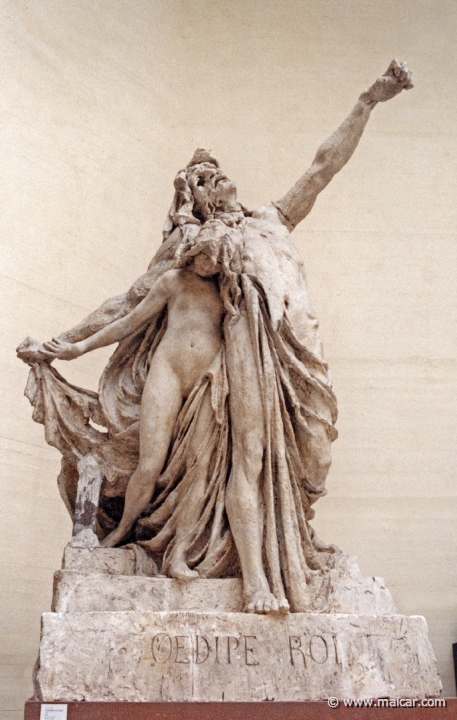 http://www.maicar.com/GML/Oedipus.html
Monday, August 29, 2011
"in our wide world there are many goings home"
Three months ago I returned "home". I came back with my rubbermaid trunks eleven sweaters, three tee shirts, four books, and two binders fuller. I came back two and a half inches taller, a few pounds heavier, with hair lighter and longer, skin tan and winter worn. I returned changed, in these, and in many more, less quantifiable ways, to the life that belonged to me for nearly seventeen years after only four months away.
The last three months have been a constant struggle to answer others' questions regarding defining my semester and how I grew and changed, and a struggle to answer my own of how I am changing now, after the adventure.
In ways I still cannot quite pin-point, I changed between January and June. I knew HMI** would change my perspective/attitude towards life and shape me in big and small ways. BUT what I didn't really consider was that I would be forced to change yet again as I learn to reconcile who I was before I left, who I was when I was gone, and who I want myself to be during my final year of high school.
Some days, as I immerse myself in the Arapahoe community and my life here, it seems like the best option would be to forget, to move on and pretend like my semester at HMI was just the long, long dream it seems to be fading into. There will be other experiences, other chances to shake up my life, other people to love. After all in words of Semisonic "every new beginning comes from some other beginning's end".
But at other times, when all I can do is think of how much I miss the community of RMS XXVI, my heart yearns and fights to return and maintain those relationships as they were. In those times, I cannot understand how anyone can be expected to say goodbye and move on from a community as strong and an experience so full as last semester.
However, I know that both of these options are impossible. I must change again, combine who I was before and who I was during into who I am to be. I must ask myself the big question rolling around in my head:
How do people change after an adventure and are forced to return "home" or to the life they previously held? How do they cope with this transformation?
In The Poisonwood Bible, the characters go on a grand and life changing adventure as a missionary family in the Congo. Kingsolver spends the first two thirds of the book describing their experiences in the Congo, shaping how the Price Family changes over the two years in the jungle. But the remaining 160 pages are spend on the subject of "going home", or deciding not to in some of the character's cases.
Orleanna and Adah return to Mississippi, but not to the lives they had held before. The noticeable difference is the lack of Nathan in their lives, the new found independence from the controlling man he was. They returned to the same old Bethlehem as very different people. Orleanna stayed distant from her old life by moving to cabin on the outskirts of town. Orleanna seems to be at ease with who she is back "home" in Bethlehem, Mississipi. Adah escaped having to return by attending Emory and becoming a doctor in Atlanta. Adah learned to walk without a crooked gait, and her voice is different in the final chapters, as Kingsolver noticeably drops the use of palindromes in Adah's narration. However, Adah is not entirely contented with how she has changed since coming home : "I miss those poems. Sometimes at night, in secret, I still limp purposefully around my apartment, Life Mr. Hyde, truing to recover my old self"(pg. 492). She relates who she was in the Congo to who she is now, and clearly is uncomfortably with the fact she shed her "old skin" with leaving Africa.
Nathan, Rachel, Leah and Ruth May never return to their old lives. Ruth May obviously couldn't seeing as she died, Nathan refused to leave his missionary work, however failed. Rachel doesn't move back into her old life, instead moving into the role of wife, then business owner, a series of events that seem to be brought and lived with apathy on Rachel's part, not by deliberate choices.
Leah, on the other hand, never stopped moving, never stopped trying to find a place that feels like home. She did not return to Mississippi, because there she was her father's daughter, and in the Congo that all changed. Leah stayed because of Anatole, maybe, but also because she could not bear to let go of the transformative experience of the first two years in the Congo. She refused to let go of any part of who she became while in Africa, even the times she visited Orleanna and Adah, she could not stay.
So, I guess in the Poisonwood Bible we have two people that go home as dramatically different people, one that finds a life to be at peace with, one that made the choice to move on, but misses who she was. Two that never returned home, but not because of any particular choice to stay. And two that found themselves bound to their adventure, to Africa, both choosing to stay with the intent to save.
None of the character's the the Poisonwood Bible were forced to return back to the same life they held before going to the Congo, and that makes me wonder, am I really forced to return to the exact life I held before, or has it transformed as I make small choices contributing to who I am as I again make this place my home?
**for all reading this blog that have no idea what I am talking about when I say my semester away or HMI or RMS XXVI, here's the website of the semester program I did Spring 2011: http://www.hminet.org/HMIsemester
Title comes from "after the adventure" by Morgan Hite
The last three months have been a constant struggle to answer others' questions regarding defining my semester and how I grew and changed, and a struggle to answer my own of how I am changing now, after the adventure.
In ways I still cannot quite pin-point, I changed between January and June. I knew HMI** would change my perspective/attitude towards life and shape me in big and small ways. BUT what I didn't really consider was that I would be forced to change yet again as I learn to reconcile who I was before I left, who I was when I was gone, and who I want myself to be during my final year of high school.
Some days, as I immerse myself in the Arapahoe community and my life here, it seems like the best option would be to forget, to move on and pretend like my semester at HMI was just the long, long dream it seems to be fading into. There will be other experiences, other chances to shake up my life, other people to love. After all in words of Semisonic "every new beginning comes from some other beginning's end".
But at other times, when all I can do is think of how much I miss the community of RMS XXVI, my heart yearns and fights to return and maintain those relationships as they were. In those times, I cannot understand how anyone can be expected to say goodbye and move on from a community as strong and an experience so full as last semester.
However, I know that both of these options are impossible. I must change again, combine who I was before and who I was during into who I am to be. I must ask myself the big question rolling around in my head:
How do people change after an adventure and are forced to return "home" or to the life they previously held? How do they cope with this transformation?
In The Poisonwood Bible, the characters go on a grand and life changing adventure as a missionary family in the Congo. Kingsolver spends the first two thirds of the book describing their experiences in the Congo, shaping how the Price Family changes over the two years in the jungle. But the remaining 160 pages are spend on the subject of "going home", or deciding not to in some of the character's cases.
Orleanna and Adah return to Mississippi, but not to the lives they had held before. The noticeable difference is the lack of Nathan in their lives, the new found independence from the controlling man he was. They returned to the same old Bethlehem as very different people. Orleanna stayed distant from her old life by moving to cabin on the outskirts of town. Orleanna seems to be at ease with who she is back "home" in Bethlehem, Mississipi. Adah escaped having to return by attending Emory and becoming a doctor in Atlanta. Adah learned to walk without a crooked gait, and her voice is different in the final chapters, as Kingsolver noticeably drops the use of palindromes in Adah's narration. However, Adah is not entirely contented with how she has changed since coming home : "I miss those poems. Sometimes at night, in secret, I still limp purposefully around my apartment, Life Mr. Hyde, truing to recover my old self"(pg. 492). She relates who she was in the Congo to who she is now, and clearly is uncomfortably with the fact she shed her "old skin" with leaving Africa.
Nathan, Rachel, Leah and Ruth May never return to their old lives. Ruth May obviously couldn't seeing as she died, Nathan refused to leave his missionary work, however failed. Rachel doesn't move back into her old life, instead moving into the role of wife, then business owner, a series of events that seem to be brought and lived with apathy on Rachel's part, not by deliberate choices.
Leah, on the other hand, never stopped moving, never stopped trying to find a place that feels like home. She did not return to Mississippi, because there she was her father's daughter, and in the Congo that all changed. Leah stayed because of Anatole, maybe, but also because she could not bear to let go of the transformative experience of the first two years in the Congo. She refused to let go of any part of who she became while in Africa, even the times she visited Orleanna and Adah, she could not stay.
So, I guess in the Poisonwood Bible we have two people that go home as dramatically different people, one that finds a life to be at peace with, one that made the choice to move on, but misses who she was. Two that never returned home, but not because of any particular choice to stay. And two that found themselves bound to their adventure, to Africa, both choosing to stay with the intent to save.
None of the character's the the Poisonwood Bible were forced to return back to the same life they held before going to the Congo, and that makes me wonder, am I really forced to return to the exact life I held before, or has it transformed as I make small choices contributing to who I am as I again make this place my home?
**for all reading this blog that have no idea what I am talking about when I say my semester away or HMI or RMS XXVI, here's the website of the semester program I did Spring 2011: http://www.hminet.org/HMIsemester
Title comes from "after the adventure" by Morgan Hite
Subscribe to:
Comments (Atom)